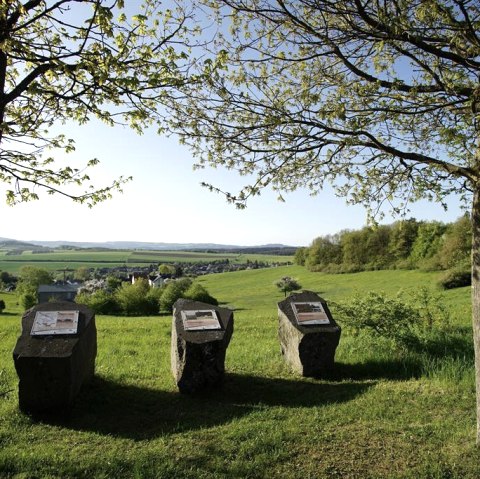

Kirche St. Kastor und Katharina, © Foto: Svenja Schulze-Entrup, Quelle: Touristik-Büro Vordereifel

Kirche St. Kastor und Katharina in Kehrig

Kehrig

The parish church of Kehrig, consecrated by Karden, and the tithe belonged to the Castor monastery in Karden until 1802. 1656 owned the church of Kehrig, which after de Lorenzi from the 13th / 14th. It is said to have originated in the 18th century, three altars. The main altar was consecrated to Castor, the side altars to Mary and Peter. Today's parish church, which was built between 1869 and 1872 by the Düsseldorf architect Pickel, is consecrated to St. Kastor and St. Katharina.

mehr lesen

Share content:

At a glance

Opening hours

  • From January 1st to December 31st
    Monday
    00:00 - 23:59

    Tuesday
    00:00 - 23:59

    Wednesday
    00:00 - 23:59

    Thursday
    00:00 - 23:59

    Friday
    00:00 - 23:59

    Saturday
    00:00 - 23:59

    Sunday
    00:00 - 23:59

The church can be visited.

For inquiries regarding baptisms or similar in the parish church, please contact the parish community Mayen - pfarrei@sankt-lukas-mayen.de, Tel. 02651 76260. Opening hours:
Monday to Friday from 9 AM to 12 PM
Monday and Wednesday from 3 PM to 5 PM
Tuesday, Thursday, and Friday - closed in the afternoon.

Place

Kehrig

Contact

Kirche St. Kastor und Katharina
Brunnen-Heerbachstraße/ Polcherstraße
56729 Kehrig
Phone: (0049) 2651 76260
Fax: (0049) 2651 2236

Homepagewrite e-mail

Bitte akzeptieren Sie den Einsatz aller Cookies, um den Inhalt dieser Seite sehen zu können.

Alle Cookies Freigeben

Plan your journey

per Google Maps

You might also be interested in

St. Kastor in Weiler, © Foto: Svenja Schulze-Entrup, Quelle: Touristik-Büro Vordereifel

Pfarrkirche "St. Kastor" in Weiler

The baroque church was built in 1727 as a hall building made of plastered quarry stone. After the population in Weiler grew steadily until 1906, plans for a church expansion were drawn up by baumeister Rüppel from Bonn. The church was to be extended with basalt stones by the addition of a transept and a choir room in neo-Gothic style, along with sacristy buildings. In 1909 the "new" church could be solemnly consecrated. Particularly worth seeing is the Marienaltar, which was taken over from the "old" church.